
Demo businessModern and minimal
Coolwater Heating & Air
HVAC company website in the modern and minimal design.
Open the demo ↗Routeless builds contractor websites and the intake, estimate, scheduling, and follow-up systems behind them.
Each of these demo websites came out of Go's builder: three designs to start, then one place to edit the site, answer leads, and publish content, for $99 a month.
HVAC company website in the modern and minimal design.
Open the demo ↗
Plumber website in the clean and professional design.
Open the demo ↗
Roofing contractor website in the bold and direct design.
Open the demo ↗Calls, forms, photos, and emergency requests land in different places, leaving dispatchers and estimators to rebuild the job by hand.
Years of completed projects, licenses, warranties, reviews, and service-area knowledge are difficult to evaluate from a generic brochure site.
A quote can be technically complete and still go cold when reminders, financing information, approvals, and next actions are not organized.
Marketing, phones, scheduling, field service, accounting, and review requests stop behaving like one process as the team expands.
Every integration is verified during scope. A planned, sandbox, or unsupported connection is never presented as production proof.
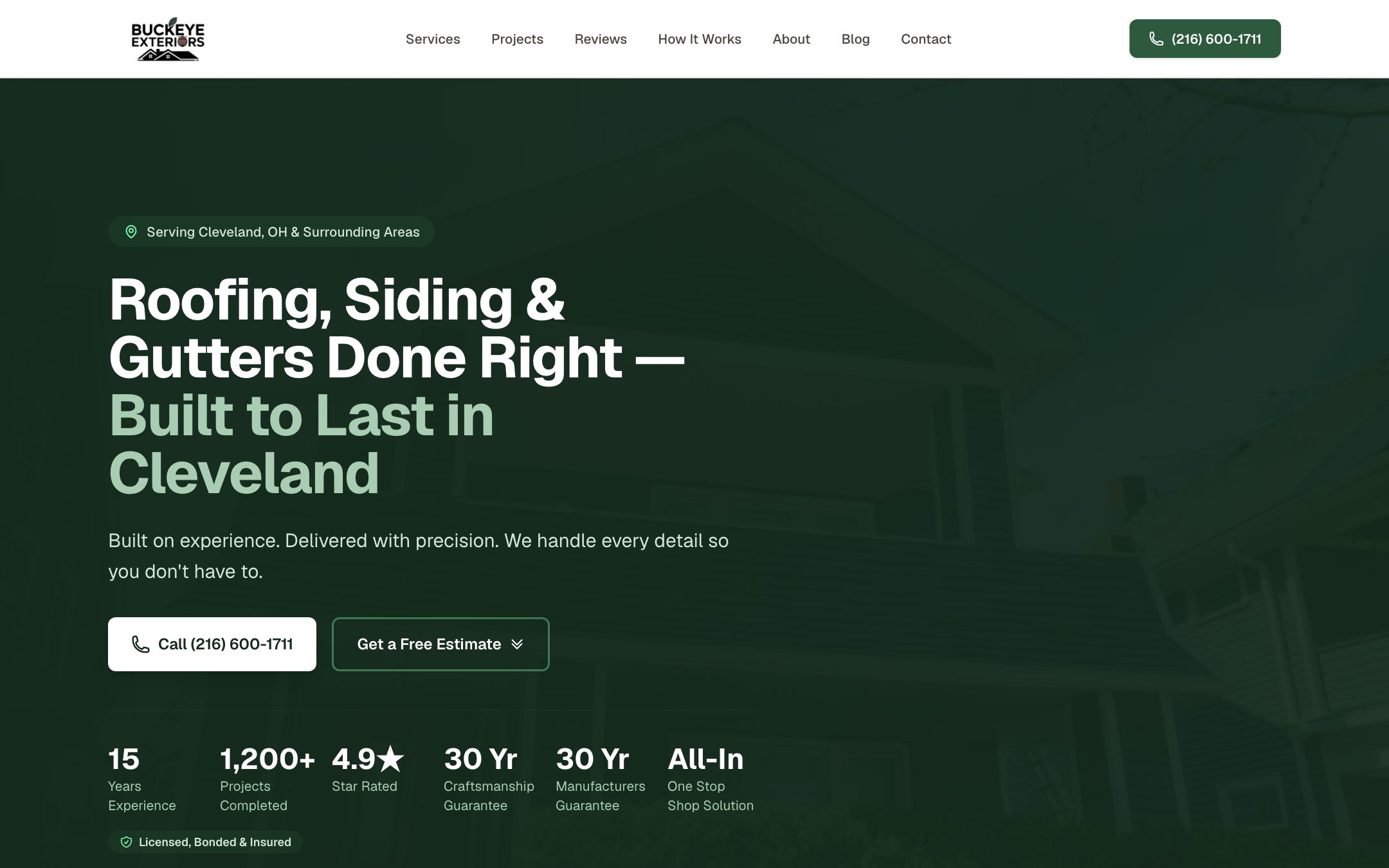
A roofing and exteriors contractor with no website of its own. Its first site, built around completed projects, reviews, and a same-day estimate path, brought in about $30K in work won over four months, as reported by the client.
Buckeye: $30K of website-attributed work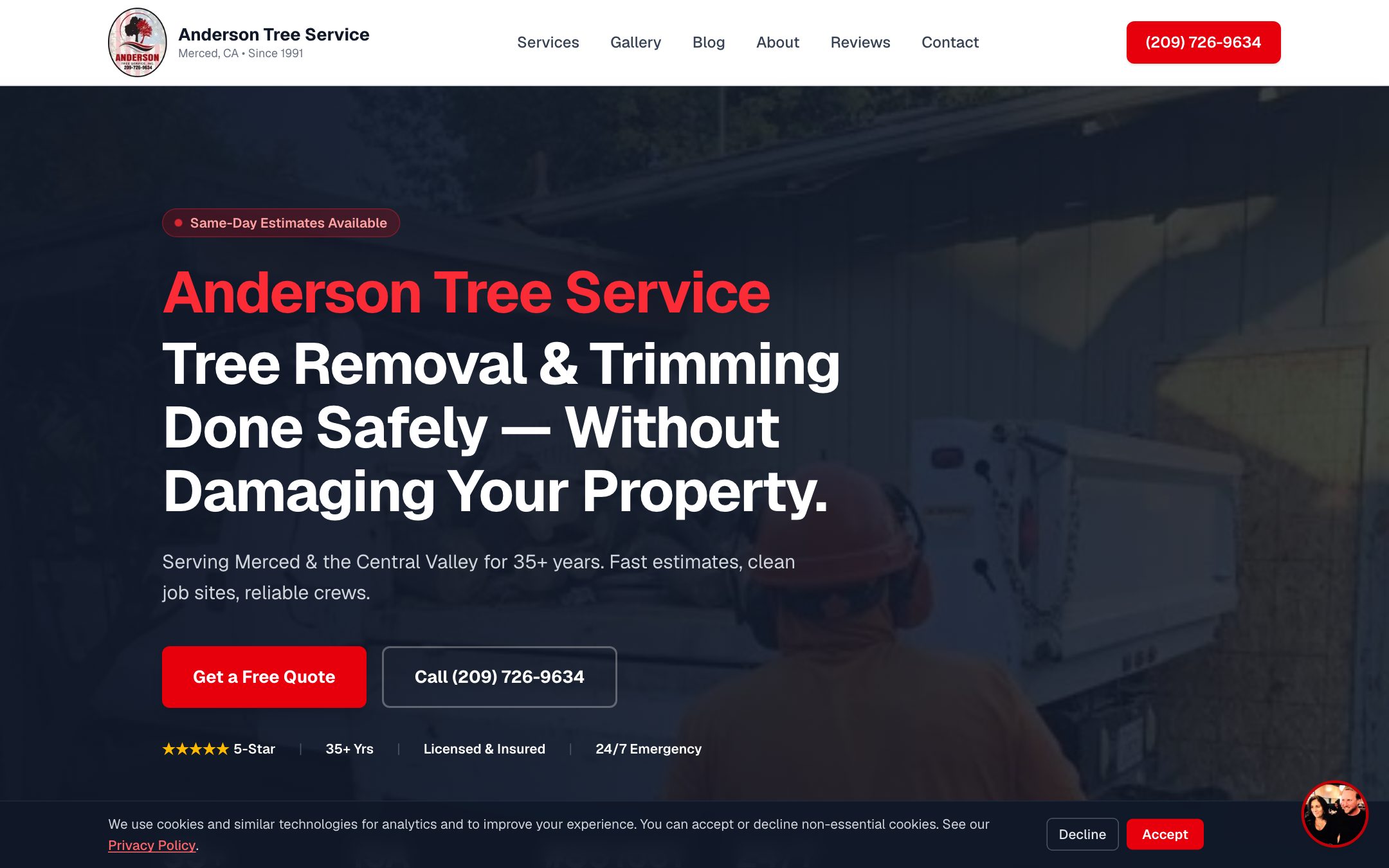
A 35-year local operator rebuilt for mobile around credentials, job-site proof, and local service pages. Google clicks rose from 19 to 40 across two consecutive 28-day periods.
Anderson: +111% Google clicks in a 28-day comparisonCustom websites are quoted after a written scope. You approve the scope, price, and timeline before work begins. The price depends on page inventory, content, integrations, migration requirements, and custom functionality.
A written scope names the pages, workflows, integrations, owners, migration work, acceptance criteria, and fixed release price.
Focused website releases commonly take 8–16 weeks. Connected customer or operating systems are divided into production releases.
Custom projects are scoped and quoted after we review what needs to exist. You approve the scope, price, and timeline before work begins. The price depends on page inventory, content, integrations, migration requirements, and custom functionality.
Routeless records who AI assistants recommend, which sources they cite, and how concentrated each local market appears. These are dated research records, not claims about lead volume or contractor quality.
Usually. Scoping starts by documenting the system of record, available APIs or supported handoffs, failure behavior, and which team owns each account. Unsupported assumptions are identified before pricing.
Only when the company has genuine service coverage and useful local evidence. Routeless does not publish city-name swaps or imply offices that do not exist.
Yes. The website can launch as a defined release while preserving the data and integration boundaries needed for later intake, portal, scheduling, or reporting work.
The client owns the production code, domain, accounts, data, and operational access defined in the written scope.
See three website designs free, and our team builds the one you choose for $999, starting with a $199 deposit. If intake, scheduling, or CRM work needs custom software, send us the workflow and we'll scope it.