
Demo businessWarm and image-led
Hollis Home Group
Real estate agent website in the warm and image-led design.
Open the demo ↗Routeless builds property websites plus the search, inventory, booking, payment, partner, and operating systems behind them.
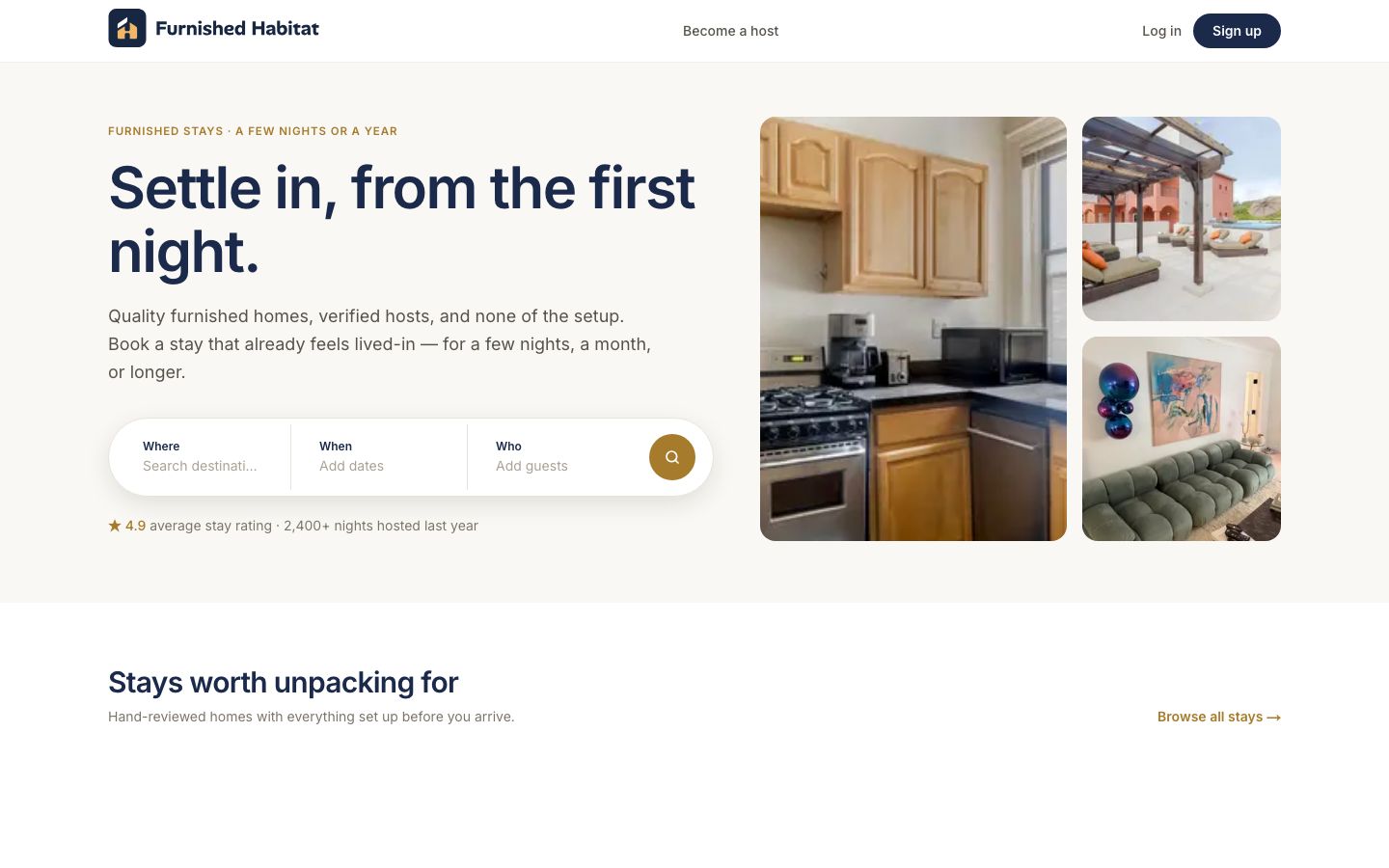
Each of these demo websites came out of Go's builder: three designs to start, then one place to edit the site, answer leads, and publish content, for $99 a month.
Real estate agent website in the warm and image-led design.
Open the demo ↗
Property management website in the classic and refined design.
Open the demo ↗
Boutique inn website in the warm and atmospheric design.
Open the demo ↗Availability, pricing, property status, and partner records become unreliable when teams update multiple systems or publish manually.
Investors, renters, guests, hosts, brokers, and operators ask different questions and require different documents, permissions, and next actions.
Payments, payouts, identity, messaging, check-in, service requests, cancellations, and support continue after a date is selected.
Listings and search are visible. Verification, exceptions, reconciliation, fraud controls, partner support, and reporting determine whether the platform runs.
Every integration is verified during scope. A planned, sandbox, or unsupported connection is never presented as production proof.
A live furnished-rental marketplace with host and guest portals, booking and payment workflows, and property-management and pricing integrations.
Furnished Habitat: a rental marketplace with host portals and payments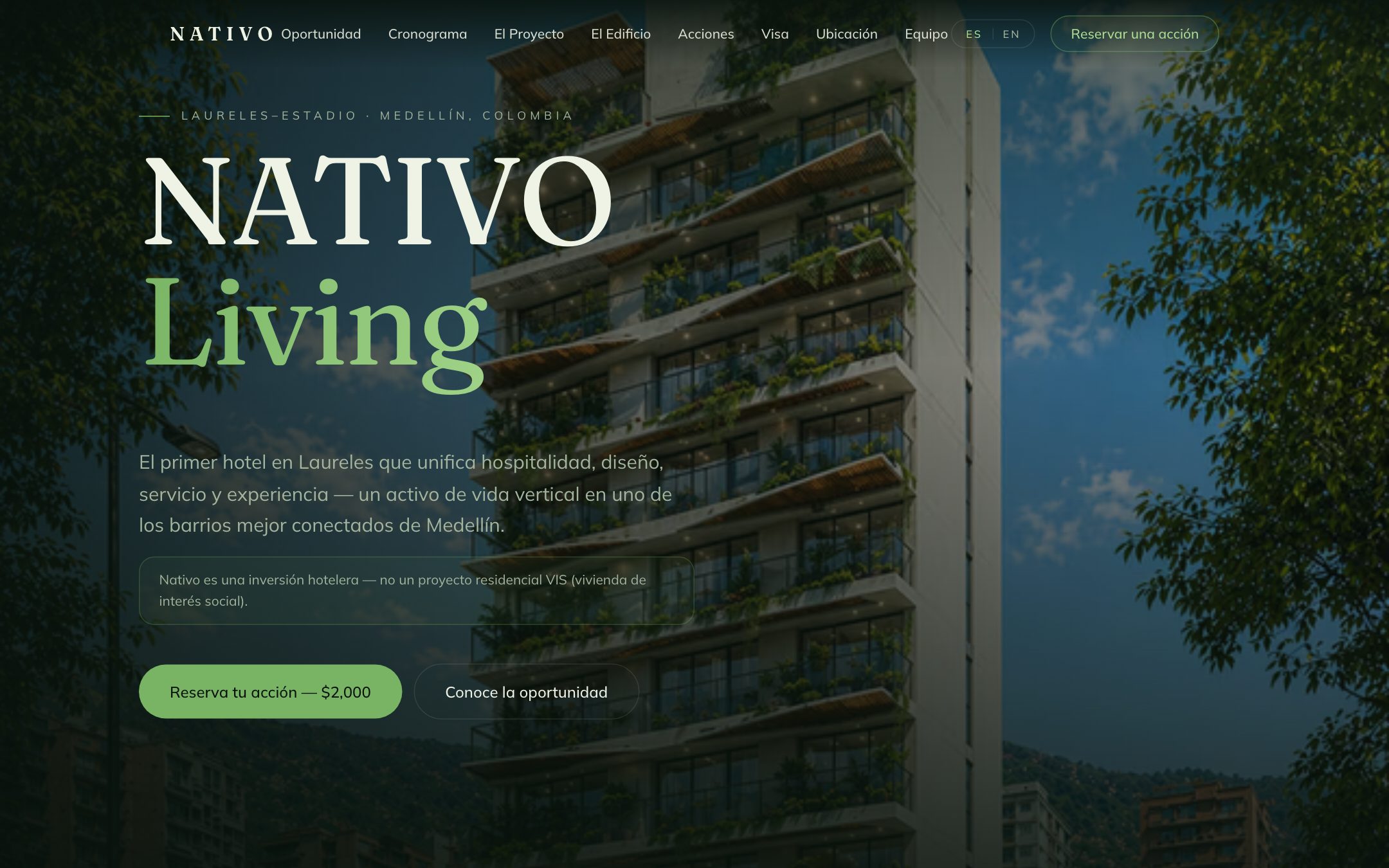
A hotel investment website with floor-by-floor exploration, investor qualification, and automated meeting booking.
Nativo Living: an interactive hotel investment website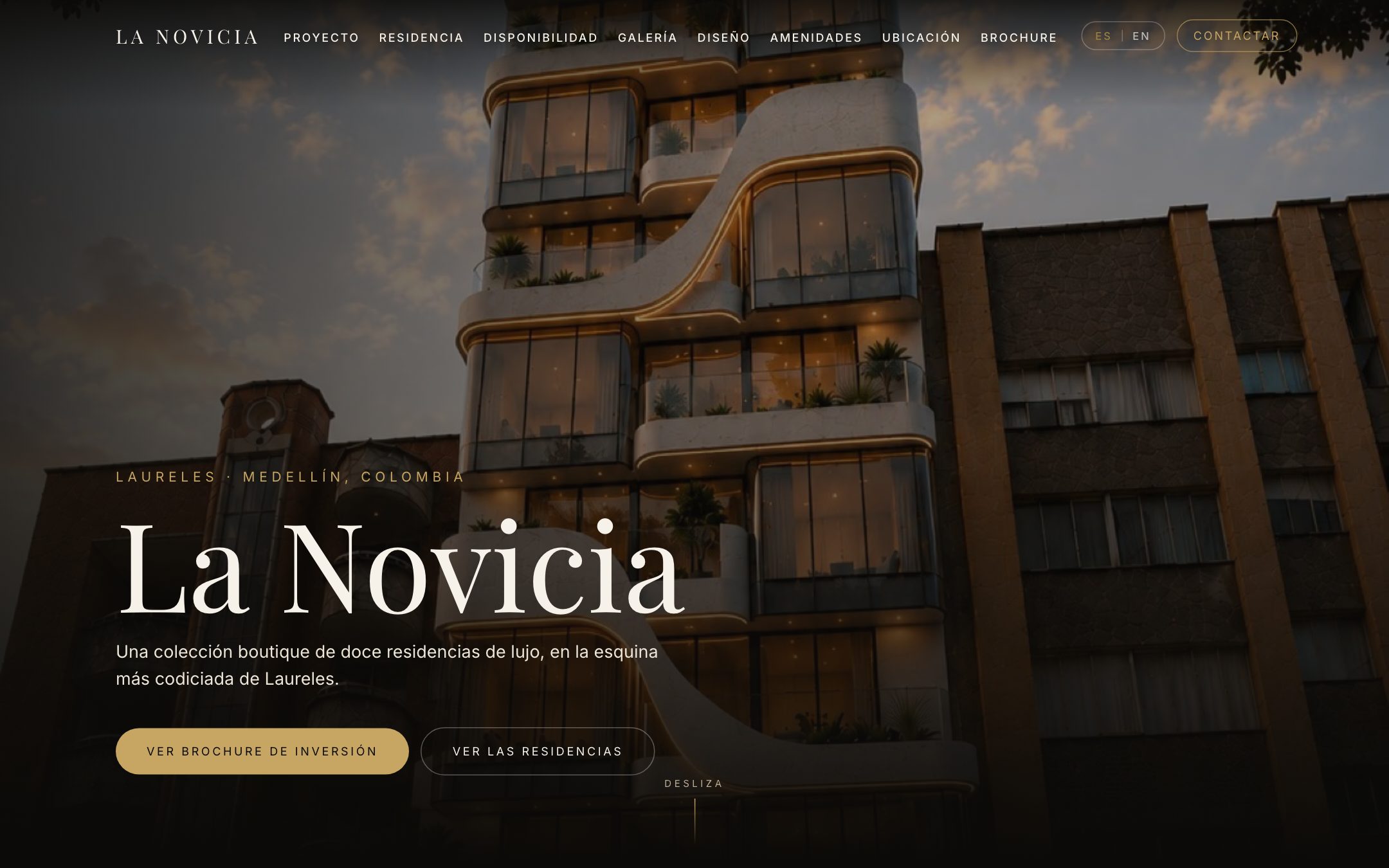
An interactive investment website with a floor selector, interior options, and automated booking for interested buyers.
La Novicia: a floor-by-floor property selector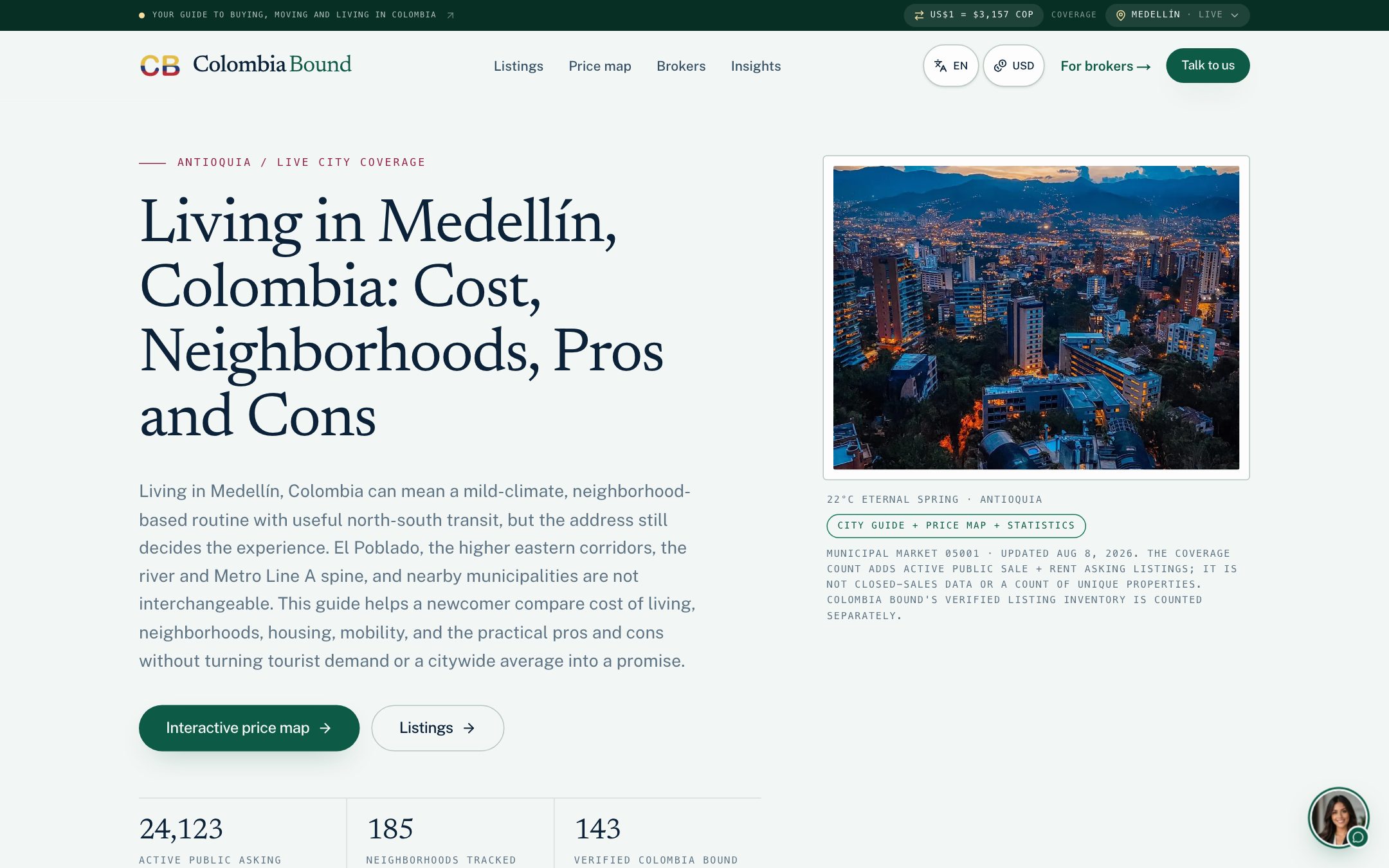
A bilingual property discovery platform with listing analysis, neighborhood pricing, verified listings, and partner routing.
Colombia Bound: a real estate data platform (Routeless Labs)Software, SaaS, marketplace, and integration work is priced after Routeless reviews what needs to exist, what it connects to, and what already runs.
A Product Blueprint is used when inventory, roles, integrations, payment flows, or inherited systems are not yet clear enough for a responsible fixed release.
A focused first release commonly takes 12–24 weeks after scope approval. Larger platforms ship as separately accepted production releases.
Custom projects are scoped and quoted after we review what needs to exist. You approve the scope, price, and timeline before work begins. The price depends on page inventory, content, integrations, migration requirements, and custom functionality.
Routeless publishes downloadable website benchmarks and dated market-recommendation records. They provide technical and discovery context; product demand, booking behavior, and investment performance require their own evidence.
Only after verifying the platform, account access, supported API or export, rate limits, event behavior, and failure recovery. Planned or sandbox connectivity is not presented as production capability.
A marketplace is appropriate when multiple suppliers, inventory owners, or counterparties require distinct onboarding, permissions, payments, and operations. A single operator often needs a smaller booking or portal release.
Yes, after a paid technical review when the code, data, infrastructure, integrations, or ownership boundaries are unclear. The review produces a risk register and responsible release plan.
The client owns the production code, accounts, data, and operational access defined in the written scope. Third-party platform terms still govern data and services hosted by those providers.
Send the current website, workflow, or system. Routeless will identify the smallest responsible release and the evidence still needed to price it.